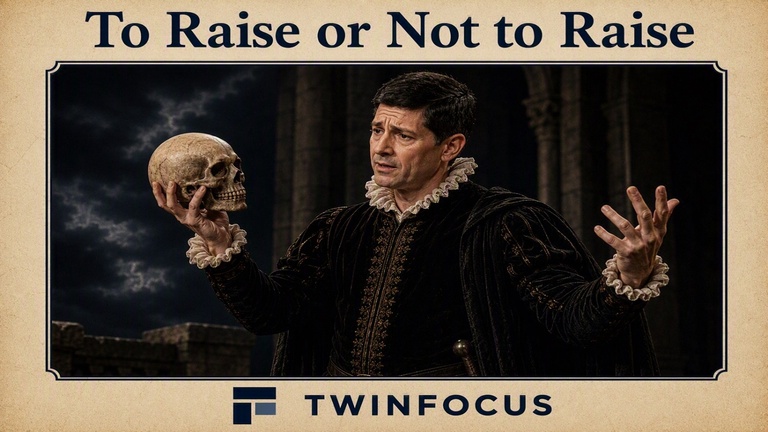
Elon Musk has become the world’s first trillionaire following SpaceX’s record-breaking IPO. The headlines have covered the number, our latest white paper at TwinFocus asks the harder questions: what does a fortune of this scale actually mean in practice, what does history really tell us about precedent, and what might it mean for how private wealth, governance, and stewardship evolve from here.
White Paper: June 2026
The First Trillionaire: What History Actually Tells Us
We have been waiting for the first trillionaire for so long that the moment has arrived almost without ceremony. Elon Musk is worth roughly $1.1 trillion on paper following the SpaceX IPO,¹ and the number is so large that most people, including most billionaires, cannot quite locate it in their mental map of reality. The instinct, understandably, is to reach for historical analogy. Rockefeller. Carnegie. The robber barons. But these comparisons, however satisfying, may tell us less than we think.
Rockefeller at his peak controlled somewhere between 1.5% and 3% of American GDP, depending on which year and which methodology you use.² Musk, by some measures, is already approaching that territory. But Rockefeller’s dominance was built on one thing — oil — at a moment when the American economy was still finding its shape. What makes Musk’s position genuinely unusual is not the number, but the spread. Rockets, satellites, electric cars, AI, autonomous robots. These are not diversified holdings in the fund management sense. They are concentrated bets on where human civilization is heading, placed by a single individual who has also, somehow, managed to make them pay. You may find him fascinating or insufferable, but the structure of what he has built is unlike anything the historical record offers us as a clean parallel.
For anyone who has spent serious time thinking about wealth — really thinking about it, not just accumulating it — the more interesting question is what $1.1 trillion actually means in practice. Much of it is locked up in founder equity, subject to restrictions, and contingent on things like SpaceX hitting a $7.5 trillion market cap or, with a straight face, putting a million people on Mars.³ This is not wealth in the sense that a family office would recognize. It is a leveraged position on the future of our species, which is either the most exciting or most terrifying thing you’ve heard today — depending on your disposition.
What quietly unsettles about this moment is that the infrastructure around private wealth — the tax conventions, the philanthropic models, the governance expectations — was not designed for this. It was designed for fortunes an order of magnitude smaller. The Giving Pledge was a remarkable idea when fortunes in the tens of billions felt like the outer limit of the possible.⁴ Nobody has seriously grappled with what responsible stewardship looks like at a trillion dollars, partly because nobody thought they’d have to. That is no longer a theoretical problem.
Rockefeller’s reputation was remade, over decades, by the uses to which his money was eventually put. History was patient with him in a way it may not be with Musk, who operates in an era of total visibility and instant judgment. The question of what the first trillionaire does next is not just his to answer. It will, in ways both direct and oblique, shape the conversation around what extraordinary private wealth is for — a conversation that touches everyone in this room, whatever the number on your own balance sheet.
The broader question is not whether Elon Musk deserves a trillion-dollar fortune, but whether society possesses the institutions and the willingness to absorb the implications of wealth on that scale. At some point, concentrated private capital ceases to be merely a personal asset and begins to resemble public infrastructure. When a single individual controls enterprises that underpin communications, transportation, artificial intelligence, energy systems, robotics, and perhaps humanity’s expansion beyond Earth, the distinction between private wealth and societal assets becomes increasingly blurred. The debates that will emerge over the coming decades are unlikely to center solely on taxation, but on stewardship, governance, and ownership itself.
History suggests that every era eventually develops mechanisms to redistribute economic power when concentration reaches levels that challenge prevailing social norms. Whether through taxation, philanthropy, public ownership, sovereign wealth structures, or entirely new forms of social compact, societies have repeatedly sought ways to ensure that the benefits of extraordinary wealth extend beyond the individuals who create it. It is not inconceivable that future generations may view certain enterprises — not unlike railroads, utilities, or other critical infrastructure of prior centuries — as national or even global treasures whose ownership and governance should reflect a broader public interest. One can imagine structures ranging from government ownership to perpetual charitable trusts established for the benefit of all humankind, particularly if the underlying enterprises become indispensable to civilization itself.
These questions remain largely theoretical today, but perhaps not for much longer. The arrival of the first trillionaire may ultimately be remembered less as a milestone in personal wealth creation and more as the moment society was forced to reconsider the relationship between capital, innovation, democracy, and the common good. How wealth at this scale should be governed, distributed, and stewarded represents one of the defining economic and philosophical questions that we believe we will all face in the years ahead. It is a subject worthy of far deeper examination and will be explored in future white papers.
Sources
- Net worth estimate of approximately $1.1 trillion as of June 12, 2026, per the Forbes Real-Time Billionaires List and Bloomberg Billionaires Index, following SpaceX’s IPO, which priced at $135/share, valuing the company at approximately $1.77 trillion (Washington Post, June 12, 2026; Visual Capitalist, June 2026). Note: estimates vary across sources and have moved quickly in the days following the IPO — some outlets have since cited figures as high as $1.2–$1.4 trillion depending on the date of calculation and SpaceX’s trading price at the time. We recommend confirming the figure against a live source immediately prior to publication.
- Estimates of Rockefeller’s peak wealth as a share of US GDP vary by source and by which year is treated as his “peak.” Some sources cite approximately 3% of US GDP in 1913, when his fortune was estimated at $900 million against a US GDP of roughly $39 billion (commonly repeated across financial media, though we were unable to trace this to a single original academic source). Britannica cites a more conservative 1.5% of GDP, based on his $1.4 billion fortune at his death in 1937. We recommend the paper either cite a specific source for whichever figure is used, or retain the range as written here to reflect genuine disagreement among historians and economists on methodology.
- SpaceX’s IPO prospectus links additional compensation for Musk to two milestones: the company reaching a $7.5 trillion market capitalization, and the colonization of Mars with at least one million inhabitants (CNBC, June 2026, reporting on the S-1 filing).
- The Giving Pledge, launched in 2010 by Bill Gates and Warren Buffett, asks signatories to commit the majority of their wealth to philanthropy; it does not specify a minimum fortune threshold. We’ve revised the original “$50 billion” reference accordingly, since we could not verify that figure as an actual benchmark of the pledge.
This material is provided for informational and educational purposes only and reflects the views of the author as of the date of publication. It is not intended as investment, legal, tax, or accounting advice, nor should it be construed as a recommendation to buy, sell, or hold any security or investment strategy.
The opinions expressed are those of the author and are subject to change without notice. Certain statements may constitute forward-looking views or expectations that are inherently uncertain and based on current assumptions. Actual results and outcomes may differ materially from those discussed.
References to specific individuals, companies, technologies, industries, or historical events are provided for illustrative purposes only and do not constitute an endorsement or recommendation. While information is believed to be reliable, no representation or warranty is made as to its accuracy or completeness.
Artificial intelligence was used as a drafting aid in the preparation of this content. Final editorial review, verification of material factual statements, and approval were conducted by TwinFocus personnel prior to publication.
Past events are not indicative of future results. All investments involve risk, including the possible loss of principal.